
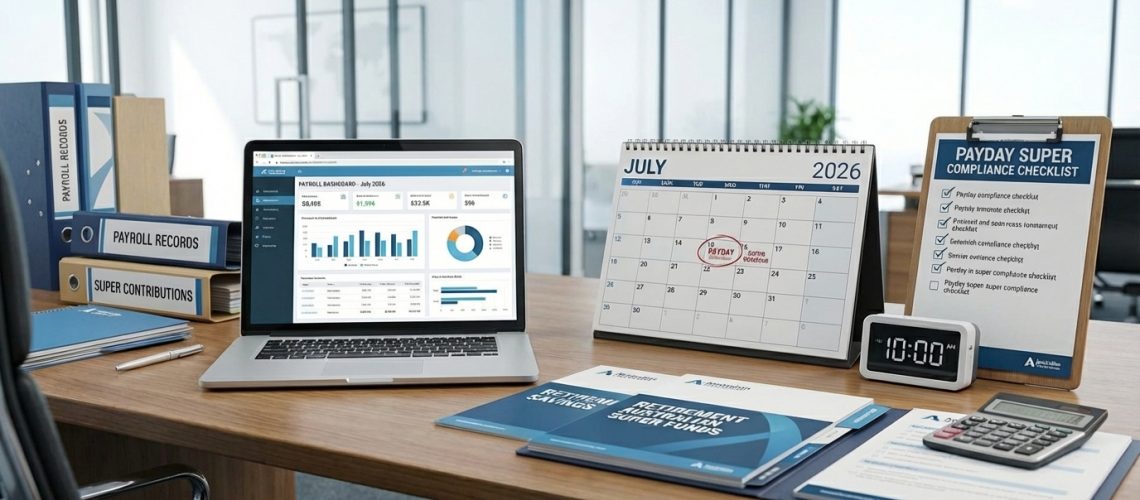
Two major superannuation changes are coming for Australian employers from 1 July 2026. The introduction of Payday Super and the closure of the ATO Small Business Superannuation Clearing House (SBSCH) will change how businesses manage super payments and payroll compliance.
Preparing early will help ensure your systems, processes and cash flow are ready before the new rules begin.
Super Moves to Payday from 1 July
From 1 July 2026, employers must pay Superannuation Guarantee (SG) contributions at the same time as wages, rather than quarterly.
Under the new rules:
- Super must be paid within seven days of each payday
- Contributions must reach employees’ super funds within that timeframe
- Late payments will trigger the Superannuation Guarantee Charge (SGC)
The SGC includes the unpaid super, interest and an administration fee, with further penalties possible if it remains unpaid.
While this change increases payment frequency, it simplifies payroll by aligning super with pay runs. Government estimates also suggest the earlier payments could increase the average worker’s retirement savings by about $7,700.
ATO Clearing House Closure – What You Need to Know
At the same time, the ATO will close the Small Business Superannuation Clearing House (SBSCH) from 1 July 2026.
Employers who rely on the SBSCH will need to move to alternative solutions such as:
- Payroll-integrated super payment systems
- Super Stream-enabled clearing houses
- Third-party super payment platforms
Most modern payroll software already supports automated super payments, but businesses using the SBSCH should begin reviewing their options now.
Why These Changes Together Increase Risk
Together, these changes increase compliance risk for employers. Businesses will be making more frequent super payments and will need to clear the balance of any super owed, which could impact cash flow.
With only seven days after payday to process contributions, any delays in payroll processing could result in penalties. Planning ahead will help avoid disruption when the new rules take effect.
Cashflow Planning Strategies
- Gradually aligning super payments with payroll now
- Updating cash low forecasts to include each pay run
- Automating super payments through payroll software
Many businesses find smaller, regular payments easier to manage than large quarterly contributions.
Recommended Transition Timeline
Now – April 2026
- Review your payroll and super processes
- Check if you currently use the SBSCH
- Confirm your payroll software supports Payday Super
Before 1 June 2026
- Select an alternative clearing house if needed
- Update payroll procedures
- Test your super payment process
Starting early will make the transition smoother and reduce compliance risks.
How We Can Help
Our team can assist with reviewing your payroll setup, assessing clearing house options, and ensuring your systems are ready for Payday Super.
If you’d like help preparing for these changes, please contact our office.